


In a world where work happens everywhere, not just in offices, the ability to organize, prioritize, and execute tasks effectively has become the new competitive edge. Digital task planning is no longer an optional convenience – it’s the foundation of modern productivity.
As companies embrace distributed and hybrid teams, task management has evolved from sticky notes and email threads to dynamic digital ecosystems. The question for many leaders now isn’t whether to use such tools, but how to make them work seamlessly across borders and time zones.
Why Digital Task Planning Has Become Essential
A decade ago, project timelines were drawn on whiteboards and progress was tracked through long meetings. Today, teams are distributed across cities, continents, and even languages. Managing that complexity through manual processes simply doesn’t scale.
Digital task planning platforms provide clarity and structure. They give every team member a shared space where priorities are visible, tasks are assigned, and progress is transparent. This visibility is what makes remote collaboration possible – it replaces uncertainty with information. When everyone knows what’s being worked on and when it’s due, accountability becomes natural, not forced. Modern solutions also automate repetitive steps such as reminders, reporting, and follow-ups, freeing teams to focus on strategy instead of status updates.
From To-Do Lists to Intelligent Workflows
The evolution from paper checklists to cloud-based systems has redefined how projects are executed. Today’s digital planners don’t just track tasks – they manage entire workflows.
With automation, task dependencies, and visual planning boards, teams can map their work intuitively. The best solutions integrate calendars, communication threads, and analytics in one place. This integration helps distributed teams align their focus without constant coordination calls.
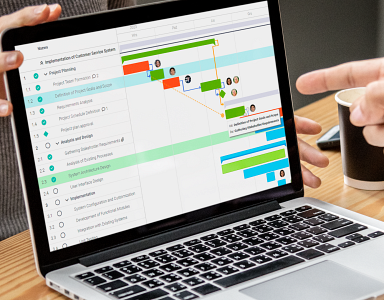
For example, the Gantt chart in FlexiProject transforms complex project timelines into a visual roadmap. It allows managers to see dependencies, allocate resources efficiently, and instantly adapt when priorities shift. This clarity ensures that remote teams move forward together, even when separated by distance.
Transparency and Accountability Across Time Zones
One of the main challenges of managing distributed teams is the loss of physical visibility. In traditional offices, updates happen spontaneously – at desks, in hallways, or during coffee breaks. Remote collaboration requires a more deliberate approach. Digital task planning tools fill that gap. They give teams a living system of record – a place where work progress is visible to everyone. This transparency fosters accountability and trust, two cornerstones of effective collaboration.

Platforms such as FlexiProject provide dashboards that track every aspect of team performance, from task status to workload distribution. Leaders gain insight into potential bottlenecks, while employees can independently manage their own priorities. The result is smoother communication and more empowered teams.
Streamlining Collaboration Through Integration
Distributed workforces rely on a combination of communication and productivity tools. The most effective systems connect these elements – linking task planning with chat, file sharing, and reporting.
When task planning becomes part of the daily workflow rather than an additional step, adoption rises and friction disappears. Integration also ensures that no task is lost between platforms, reducing miscommunication and duplicate effort.
In many organizations, project software now serves as the “digital headquarters” – the hub that ties together conversations, deliverables, and deadlines. FlexiProject exemplifies this trend by uniting Gantt charts, Kanban boards, and performance dashboards under a single interface designed for productivity-first teams.
The Strategic Value of Digital Planning
Digital task planning isn’t just an operational improvement – it’s a strategic advantage. When work is visible, measurable, and adaptable, organizations make better decisions. Managers can predict delays, analyze performance, and allocate resources in real time.
Moreover, the data collected through these systems provides a continuous feedback loop. Teams can identify trends, refine processes, and improve accuracy with every project cycle. For distributed organizations, this insight becomes a multiplier of efficiency. In short, structured planning leads to smarter execution – and smarter execution leads to stronger results.
Conclusion: Turning Digital Planning into a Productivity Engine
The way we work has changed forever. Distributed teams demand more than tools that simply manage tasks; they need systems that connect people, priorities, and purpose.
Digital task planning bridges the gap between distance and direction. It ensures that every individual – whether working from an office, a café, or another continent – moves in sync with shared goals.
With platforms like FlexiProject, task planning becomes a strategic discipline rather than an administrative chore. It transforms scattered teams into cohesive units, aligning effort with impact and turning digital collaboration into measurable productivity.